Representations and protocols for networked agents
Algorithms for representing and discovering agent capabilities at web scale — capability embeddings, learned network topologies, and retrieval for discovery and resolution.
Decentralized, Continually-Adapting Agent Ecosystems
“What new science do we need for agentic intelligence at internet scale?”
AI's basic unit of computation is shifting — from single models and individual agents toward continually running, internet-scale collectives of agents that discover one another, communicate, coordinate, and adapt over open networks. Studying these collectives raises questions that single-agent methods do not answer: how to represent and discover agent capabilities at web scale; how learning, credit assignment, and self-improvement behave over changing agent graphs; and how large populations of agents coordinate, remain trustworthy, and stay safe under strategic pressure.
This workshop treats the networked agent collective as a first-class research object, convening researchers across multi-agent and representation learning, learning theory, reinforcement learning, and the societal impacts of AI — to identify the field's foundational problems and the shared evaluation it needs. The open problems are fundamentally about learning and adaptation rather than infrastructure, which is why NeurIPS — rather than a systems or protocols venue — is the right home for this discussion.
The workshop will be held in Atlanta, Georgia, co-located with NeurIPS 2026.
Shared benchmarks for the adaptation, stability, and emergent capability of always-on collectives, where no standard exists today.
Credit assignment over changing agent graphs, and when networked self-improvement converges rather than destabilizes.
Manipulation-resistant reputation and stable coordination under strategic agents at scale.
We invite submissions that treat the network — rather than a single model or agent — as the unit of analysis. We welcome both early-stage work and more mature results, including position pieces, negative results, and datasets or benchmarks. The program spans three coupled research thrusts.
Algorithms for representing and discovering agent capabilities at web scale — capability embeddings, learned network topologies, and retrieval for discovery and resolution.
Continual and online learning over changing agent graphs; credit assignment across the network; emergent collective intelligence; and holistic evaluation of self-improving systems.
Manipulation-resistant reputation and trust; coordination that aligns large agent populations; population-scale dynamics and emergent norms; and alignment, accountability, and safety for continually running, self-modifying systems.
Excluding references and appendices. Ideal for early-stage work, position pieces, and negative results.
Excluding references and appendices. For more mature results, datasets, and benchmarks.
All deadlines are 23:59 anywhere on Earth (AoE). Dates are subject to change.
Tentative schedule.
| Time | Session |
|---|---|
| 00:00 – 00:15 | Opening: the major transition to networked agents |
| 00:15 – 01:00 | Keynote 1 |
| 01:00 – 01:45 | Contributed talks (3 × 15 min) |
| 01:45 – 02:15 | Coffee & poster session I |
| 02:15 – 03:00 | Invited talks — block I (foundations and learning) |
| 03:00 – 03:45 | Hands-on demo of state-of-the-art agentic web tools |
| 03:45 – 05:00 | Lunch |
| 05:00 – 05:45 | Keynote 2 |
| 05:45 – 06:30 | Invited talks — block II (economics, governance, safety) |
| 06:30 – 07:00 | Coffee & poster session II |
| 07:00 – 07:45 | Contributed talks (3 × 15 min) |
| 07:45 – 08:30 | Moderated panel & open debate: what is the unit of intelligence? |
| 08:30 – 08:45 | Closing: research agenda and artifact commitments |
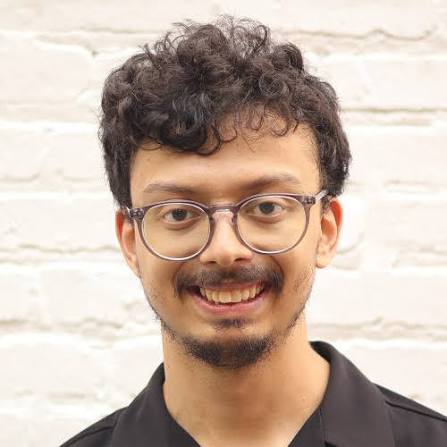
MIT
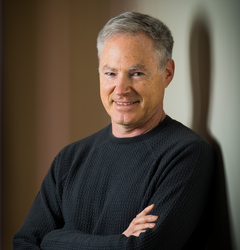
Microsoft
Salesforce AI Research

UT Austin & Cognizant AI Lab
Invited speakers and the program committee will be announced soon.
For questions about the workshop, submissions, or participation, please reach out to the organizers at pchari@media.mit.edu or risto@cs.utexas.edu. We are happy to hear from you.